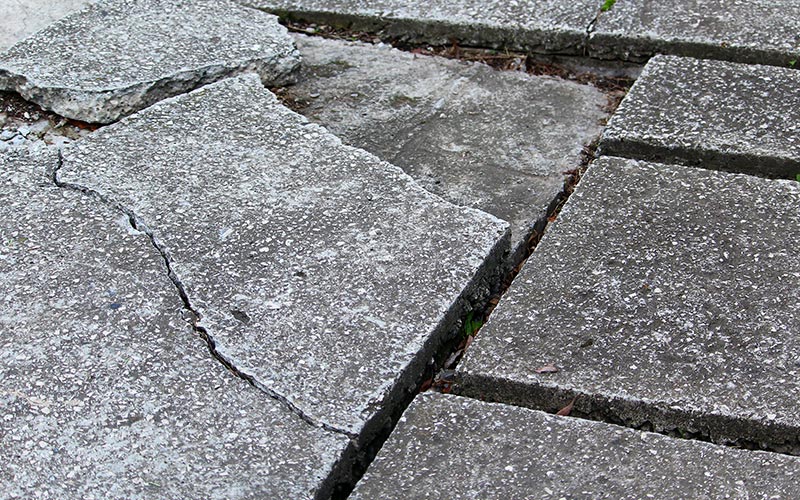
You step outside one morning, glance at your driveway, and notice it. A section has sunk. A few pavers are cracked. The edge by the garage looks like it shifted overnight.
Sound familiar?
For Florida homeowners, paver damage is not a matter of if. It's a matter of when. The combination of sandy soil, heavy rainfall, relentless UV, and tree root systems creates conditions that wear down even well-installed hardscapes over time.
The good news is that most paver damage is repairable. The even better news is that catching it early keeps costs low and prevents small issues from turning into expensive full replacements.
Here's how to know what you're actually dealing with and what to do about it.
Why Florida Pavers Fail in the First Place
Before you can decide between repair and replacement, it helps to understand why paver damage happens in Florida at a higher rate than most other states.
Sandy Soil and Base Erosion
Florida's soil is predominantly sandy. Sandy soil compresses and shifts under load, especially when it gets saturated during the rainy season. When the base beneath your pavers compresses unevenly, you get settling, sinking, and uneven surfaces.
This is the single most common cause of sunken pavers across the Treasure Coast. It is not a defect in the pavers themselves. It is a base problem.
Heavy Rainfall and Drainage Issues
Florida receives over 50 inches of rain annually in most areas, with the Treasure Coast seeing intense afternoon storms from June through September. When water has nowhere to drain properly, it pools beneath and around paver surfaces and erodes the base from below.
Poor drainage during installation is the most preventable cause of paver failure. A properly graded and compacted base handles Florida's rainy season without issue. A shortcut on installation day turns into a repair call within a few years.
Tree Roots
Mature landscaping is one of the things that makes Treasure Coast neighborhoods beautiful. It also happens to be one of the leading causes of cracked pavers. Tree roots follow moisture and will push through joint material, lift individual pavers, and crack surfaces that sit directly in their path.
Properties in established neighborhoods throughout Port St. Lucie, Stuart, and Jensen Beach deal with root intrusion more frequently than newer developments where landscaping is still maturing.
Salt Air and Joint Degradation
For homeowners in Jupiter, Vero Beach, and Jensen Beach with direct coastal or lagoon exposure, salt air accelerates the degradation of polymeric joint sand. When joints lose integrity, pavers become unstable, weeds establish, and the surface begins to shift.
Resealing pavers every 2 to 3 years and refreshing joint sand helps prevent this. Skipping maintenance cycles accelerates it.
The 5 Most Common Types of Paver Damage
1. Sunken Sections
This is the most common complaint we hear from homeowners. A section of the driveway or patio has settled lower than the surrounding surface, creating a depression that pools water after rain.
Sunken pavers are almost always a base problem. The pavers themselves are typically fine. The fix involves lifting the affected pavers, re-compacting the base, adding material where needed, and resetting the pavers to the correct level.
Repair or replace? Repair. In most cases this is a straightforward fix that does not require replacing the pavers at all.
2. Cracked Pavers
Individual cracked pavers are common and usually caused by one of three things: a heavy impact (vehicle weight in a spot not designed for it), root pressure from below, or a base failure that put uneven stress on the surface.
A single cracked paver or a small cluster is a targeted repair. The affected pavers get replaced with matching material, the base is addressed if needed, and the area is re-sanded and compacted.
Repair or replace? Repair, unless the cracking is widespread across the entire surface. Widespread cracking usually signals a systemic base failure that requires a full reset.
3. Shifting and Uneven Pavers
When pavers start moving out of their original position, creating lips, gaps, and uneven surfaces, the joint sand has failed or the base has shifted beneath them.
This is a safety hazard on driveways and walkways and a trip hazard on pool decks. It is also a sign that moisture is getting underneath and continuing to cause damage.
Repair or replace? Repair in most cases. Resetting pavers, re-compacting the base, and applying fresh polymeric sand stabilizes the surface and prevents further movement.
4. Efflorescence and Surface Staining
White haze, mineral deposits, and organic staining on the surface of your pavers are not structural issues. They are maintenance issues.
Efflorescence occurs when water moves through the paver body and deposits calcium carbonate on the surface as it evaporates. It is extremely common in Florida's wet climate and especially prevalent on travertine and concrete pavers near the coast.
Repair or replace? Neither. This is a cleaning and sealing issue, not a structural one. Professional paver sealing after proper cleaning eliminates efflorescence and prevents it from returning.
5. Weed Growth Through Joints
Weeds pushing through paver joints are a sign that joint sand has failed. It does not mean your pavers need to be replaced. It means they need maintenance.
Left unaddressed, weed root systems can lift individual pavers and accelerate base erosion, eventually turning a maintenance issue into a structural one.
Repair or replace? Maintenance. Cleaning, fresh polymeric sand, and sealing resolves weed intrusion. If weeds have been growing unchecked for years and roots have caused physical displacement, targeted repairs may be needed as well.
When Should You Actually Replace Your Pavers?
Full replacement is warranted in fewer situations than most homeowners expect. Here are the scenarios where repair does not make sense:
- Systemic base failure across the entire surface. If the entire driveway or patio has settled, shifted, and cracked throughout, not just in isolated sections, the base has failed broadly. Resetting individual sections will not hold. A full excavation and reinstallation is the correct solution.
- Discontinued or unavailable matching pavers. If your pavers are discontinued and a repair section would visibly not match the rest of the surface, some homeowners choose full replacement for aesthetic consistency. This is a preference decision, not a structural one.
- Severe structural damage from root intrusion. In rare cases where tree roots have caused extensive cracking and displacement across a large area, and the root system has not been addressed, replacement combined with root management may be the only durable solution.
- Age and cumulative wear. Pavers installed 25 to 30 years ago with no maintenance history and significant surface degradation throughout may be at the end of their practical life. At that point, full replacement with a fresh installation is often more cost-effective than repeated repairs on a failing surface.
Outside of these scenarios, repair is almost always the right call.
How Much Does Paver Repair Cost in Florida?
Paver repair pricing in Florida depends on the scope of the damage, the repair method required, and whether base work is involved.
Small spot repairs involving a handful of pavers and no base work are the most affordable category. Resetting a sunken section with base re-compaction falls in the mid range. Large-scale repairs involving widespread resetting, significant base work, or root mitigation are more involved and priced accordingly.
What you will not pay for with a legitimate contractor is unnecessary work. A good paver repair company assesses the root cause, tells you what actually needs to be done, and prices accordingly. If someone quotes you a full replacement when a repair will solve the problem, get a second opinion.
We always provide free, no-obligation estimates for paver repair in Port St. Lucie, paver repair in Jupiter, paver repair in Stuart, and throughout the Treasure Coast. You will know exactly what you are paying for before any work begins.
How the Paver Repair Process Actually Works
If you have never had pavers repaired before, it helps to know what to expect. The process is more involved than most people assume, which is exactly why shortcuts during repair lead to the same problem coming back six months later.
Here is how we approach every paver repair job on the Treasure Coast.
Step 1: Inspection and Root Cause Assessment
Before a single paver gets lifted, we assess what caused the damage. Surface symptoms tell part of the story. A sunken section near a downspout points to drainage erosion. Cracking in a straight line often means root pressure from below. Widespread shifting across a large area usually signals base failure from inadequate compaction during the original installation.
Treating the symptom without identifying the cause is how you end up calling for the same repair twice. We find the source first.
Step 2: Lifting the Affected Pavers
We carefully remove the damaged pavers and set them aside. In most cases the pavers themselves are reusable. Cracked or broken pavers get replaced with matching material. We document what comes up so the final layout matches the original pattern exactly.
Step 3: Base Re-compaction and Material Addition
This is the step that separates a lasting repair from a temporary one. We excavate the base material, assess the depth and compaction, add gravel or sand where needed, and compact it properly before anything goes back down.
In Florida's sandy soil, skipping this step guarantees the problem returns. The pavers are only as stable as what is underneath them.
Step 4: Resetting the Pavers
Pavers go back down on a fresh, properly leveled sand bed. We check alignment, level, and spacing throughout the reset to make sure the repaired section integrates cleanly with the surrounding surface. All cuts are made with professional saws for clean, finished edges where needed.
Step 5: Polymeric Sand and Compaction
Fresh polymeric sand gets swept into all joints across the repaired area. A plate compactor runs over the surface to firmly seat the pavers and work the sand deep into the joints. When activated with water, polymeric sand hardens and locks everything in place, blocking weeds and preventing the joint failure that leads to future shifting.
Step 6: Sealing (Recommended)
We strongly recommend sealing the repaired surface within 30 to 60 days. Sealer locks in the polymeric sand, adds a moisture barrier, and restores color uniformity across the repaired and surrounding areas. In many cases we complete repair and sealing in the same visit.
The full process for a typical residential repair takes one day. Larger projects or those requiring significant base work may take two. Either way, you will have a clear timeline before we start.
Repair First, Then Protect
One thing homeowners sometimes skip after a paver repair is sealing. It is understandable. You just paid to have the problem fixed and you want to move on.
But repairing pavers without sealing them afterward leaves the repaired surface exposed to the same Florida conditions that caused the damage in the first place.
Fresh polymeric sand needs to be locked in place with sealer to perform correctly. Newly reset pavers benefit from the moisture barrier that sealing provides. And the restored color from a good seal job makes the repaired sections blend naturally with the surrounding surface.
We recommend sealing all repaired paver surfaces within 30 to 60 days of repair. In many cases we can complete both the repair and sealing in the same visit.
Related: How to Keep Pavers Looking New After Sealing | How Long Does Paver Sealer Last in Florida?
Catching Problems Early Saves Money
The single most important thing Florida homeowners can do for their pavers is pay attention to early warning signs.
A small sunken section addressed early is a two-hour repair. The same sunken section left alone through two rainy seasons becomes a much larger base failure that takes the surrounding pavers with it.
A cracked paver replaced promptly costs almost nothing. A crack left open through the wet season allows water infiltration that erodes the base and leads to additional shifting throughout the area.
Florida's climate is not going to go easy on your hardscapes. But staying ahead of minor damage with regular maintenance and prompt repairs keeps your pavers looking sharp and performing correctly for decades.
Related: How Florida Weather Destroys Your Pavers | 5 Signs Your Pavers Need to Be Resealed
A Buff & Beyond: Paver Repair Across the Treasure Coast
We repair cracked, sunken, shifting, and uneven pavers throughout Port St. Lucie, Jupiter, Stuart, Jensen Beach, Vero Beach, and surrounding communities. Every job starts with an honest assessment of what caused the damage and what it actually takes to fix it correctly.
No upsells. No unnecessary replacements. Just straight answers and quality work.
If your pavers are showing any of the signs above, reach out for a free estimate. We will take a look, tell you exactly what is going on, and give you a clear, itemized quote before any work begins.