The Short Answer
A paver driveway in Port St. Lucie usually needs resealing every 2 to 3 years. The clearest signs are faded color, stains that no longer come out, weeds and loose sand in the joints, a rough surface and water that soaks in instead of beading up. If the driveway shows any of these, the old sealer has likely worn off and the pavers are exposed.
In This Guide
Why Does a Faded Driveway Mean the Seal Is Gone?
Faded color is usually the first sign that the sealer has worn off, because UV rays and oxidation start working on the pavers once the protective coat is gone. If the driveway no longer has that rich, freshly installed look, the seal has likely given out.
A driveway may not be the flashiest part of a home, but it takes more abuse than almost anything else. Between blazing sun, daily traffic and frequent rain, even well-sealed pavers do not stay protected forever. Resealing on schedule is a protective decision as much as a cosmetic one.
Some neighborhoods fade faster than others. Homes in Tradition and Riverland usually show UV damage earlier because of minimal tree coverage and strong afternoon sun. Our post on how Florida weather damages pavers explains how sun, heat and rain wear down a driveway.

Why Won't the Stains Come Out Anymore?
Stains that used to rinse away start setting in once the sealer is gone, because the pavers become porous again. Oil spots, leaf tannins and rust are far easier to clean off a sealed surface.
When pressure washing no longer lifts the stains, the original seal has usually worn through and the stains are soaking into the paver itself. At that point every spill, drip and leaf pile leaves a mark that is harder to remove than the last one.
Rust is a common local example. Driveways in Port St. Lucie neighborhoods like Bedford Park and Town Park often show rust stains from well irrigation. Our crew provides paver sealing in Port St. Lucie and can treat those rust stains before applying a fresh seal, which helps keep them from setting in again.
What Do Weeds and Loose Sand Between Pavers Mean?
More weeds and sand washing out of the joints mean the seal is no longer locking the joint sand in place. That is a strong sign it is time to reseal.
A good seal holds the joint sand firm, which keeps weed seeds from settling between the pavers. Once the sand washes out, weeds move in, and their roots can force pavers apart and lead to shifting or uneven spots.
The fix is more than a new coat of sealer. A professional reseal starts with cleaning the joints, then sweeping fresh silica sand into them for joint stabilization, and the sealer locks that sand in. Pavers that have already shifted may need paver repair before the new seal goes down.
Want it done for you? A Buff & Beyond gives a free written, itemized quote that is fixed before the crew arrives, and Andrew replies right away by phone or text. Call (772) 971-2121 or request your free quote.
Why Does Water Soak In Instead of Beading Up?
Water soaks in when the sealer has broken down and the pavers are exposed. Right after a quality seal, rain beads up on the surface like water on a freshly waxed car.
When rain darkens the pavers and disappears into them instead of forming droplets, the protection is gone. If the pavers absorb water almost immediately, the old sealer may have broken down sooner than expected, and our post on why paver sealing fails in Florida covers the most common causes.
A surface that feels gritty or rough, or seems to shed particles, points to the same problem. Water and traffic wear down the top layer of unprotected pavers over time, and a seal adds a barrier that keeps that wear to a minimum.
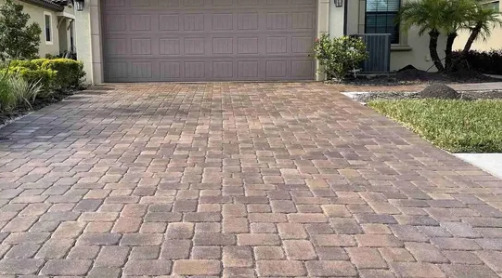
These signs often show up together:
How Often Should a Port St. Lucie Driveway Be Resealed?
Brick paver driveways in Port St. Lucie should be resealed every 2 to 3 years. If it has been longer than that, the surface is likely overdue.
Even high-quality sealers break down over time, especially with coastal weather. Port St. Lucie averages around 53.5 inches of rain a year, and sprinkler overspray adds more water on top of that, so a driveway here goes through a lot of wetting and drying between seals.
Delaying a reseal does more than dull curb appeal. It can lead to:
Think of resealing like an oil change: a small, regular step that protects against much bigger expenses later. Our post on what happens when pavers are never sealed shows the long-term effects of leaving a driveway unprotected.
How Does Our Crew Reseal a Driveway in Port St. Lucie?
Our crew reseals driveways in Port St. Lucie with a deep clean, fresh silica joint sand and a two-part, water-based polyurethane sealer. It starts with a free written, itemized quote that is fixed before the crew arrives.
If it is unclear whether the driveway needs resealing, a quick professional look answers the question. The crew checks the color, the joints, the stains and how the surface handles water, explains the options and, if needed, gets the driveway looking new again. A crew of 1 to 3 handles each home, and most jobs take 1 to 6 hours.
Paver sealing comes with a two-year warranty against product failure. A Buff & Beyond has been sealing pavers in Port St. Lucie, Jensen Beach, Jupiter, Palm City, Vero Beach and Stuart since 2017, is fully insured with workers' comp and general liability and holds a 4.9-star rating from more than 530 Google reviews. Bundling a reseal with other services, such as roof cleaning or house washing, saves money.
To book a reseal, call or text (772) 971-2121 and Andrew replies right away. You can also learn more about our paver sealing company in Port St. Lucie or read our complete guide to paver sealing in Florida, which covers inspection, preparation and long-term care.
Frequently Asked Questions
Related services from our crew: paver repair, pressure washing and house washing.