The Conversation We Have With Almost Every Port St. Lucie Homeowner
It usually starts the same way. A homeowner calls us after noticing their once-crisp paver driveway has gone from a neighborhood showpiece to something that looks like it belongs in an abandoned lot. The color has faded. Weeds are pushing through the joints. There's a film of algae creeping in from the edges. And they always say the same thing: "I didn't realize it happened so fast."
Here's the truth about pavers in Florida: the climate is relentless. Between the intense UV exposure, the summer humidity, and the near-daily afternoon rainstorms in places like Port St. Lucie and Stuart, unsealed pavers deteriorate fast. That's not a scare tactic. It's just what we see on the job every single week.
We're the team at A Buff & Beyond, and paver sealing is one of the services we're asked about most. So let's talk about what it actually involves, what it does for your property, and how to know when it's time.
What Paver Sealing Actually Does
Sealing isn't just cosmetic, though the visual difference is honestly dramatic. The real job of a quality sealant is to create a protective barrier over the paver surface that resists moisture intrusion, UV fading, oil stains, and biological growth like mold and algae.
Un-sealed pavers are porous. Rain soaks in. Algae finds a home. Joint sand washes away slowly over time, which is what allows weeds to take root. Once you lose that joint sand, you're also losing the structural integrity that keeps your pavers from shifting and settling unevenly.
A proper seal locks the joint sand in place, which is a detail a lot of homeowners don't think about until they've already got a wobbly section of driveway. According to the Interlocking Concrete Pavement Institute, maintaining joint sand integrity is one of the most critical factors in paver longevity. Sealing is the most effective way to do that.
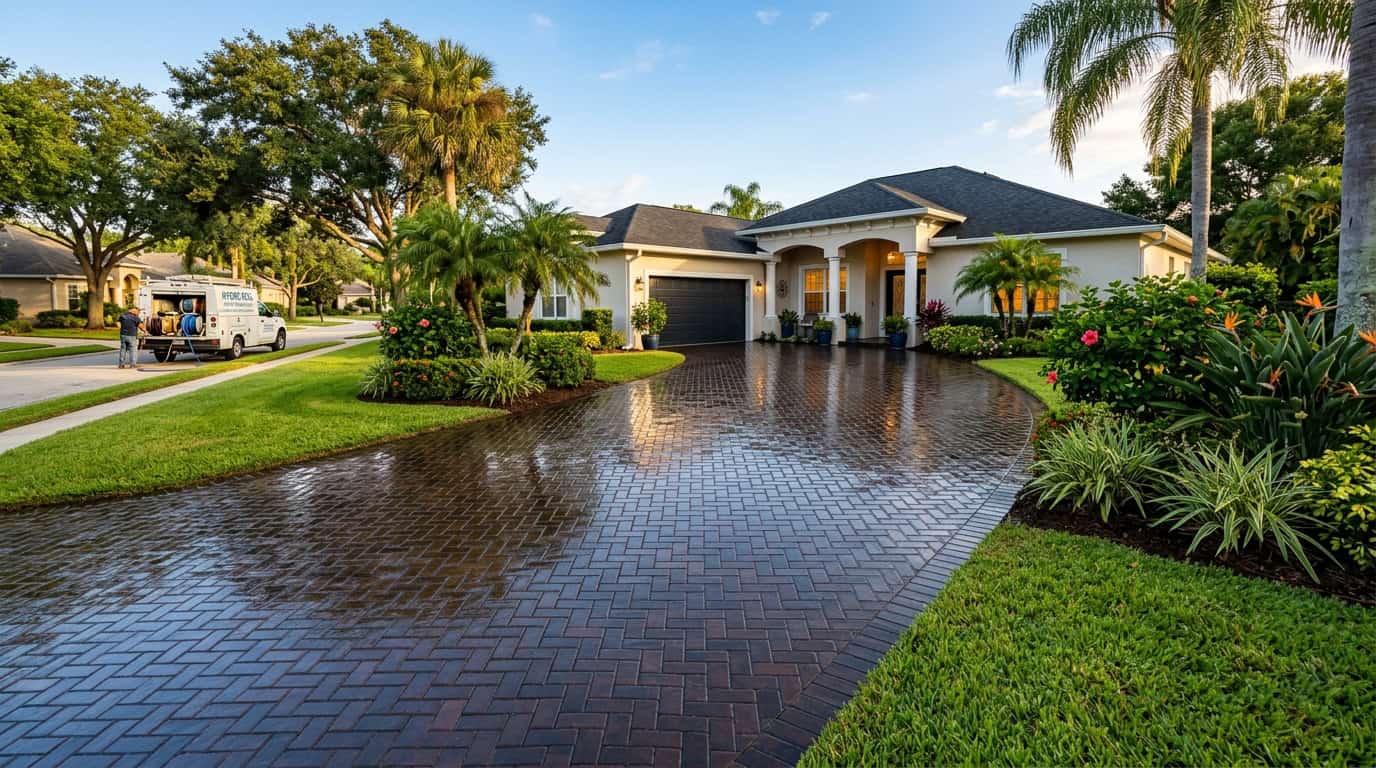
There's also the curb appeal side of things. A wet-look or matte sealant makes colors pop the way they did when the pavers were first installed. We've had customers tell us their neighbors knocked on the door asking who redid their driveway, when all we did was clean and seal the existing surface.
Why Florida Timing Matters More Than You Think
One thing that's specific to our market here on the Treasure Coast: timing your paver sealing right is more complicated than it sounds.
Sealant needs dry, warm conditions to cure properly. Not hot, and not wet. That puts summer in an awkward spot. We're dealing with afternoon storms almost every day from June through August, which means the window for a proper cure can be tight. It's not impossible to seal pavers in summer, but it takes experience to read the conditions correctly.
September is actually one of our favorite months for paver sealing. The worst of the storm season starts to ease, temps are still warm enough for quick curing, and most homeowners are just getting back into the rhythm of maintaining their properties after a summer of neglect. If you've been putting this off, early fall is the sweet spot.
We always check the 48-hour forecast before any sealing job. If there's meaningful rain in the window, we reschedule. It's that simple, and it's the kind of thing an experienced local crew knows to do.
What the Process Looks Like From Start to Finish
A lot of companies skip steps here. That's actually one of the most common complaints we hear from homeowners who've had pavers sealed by someone else and weren't happy with the results.
The correct sequence matters.
First, the pavers need to be thoroughly pressure washed to remove all surface contamination. Dirt, algae, oil stains, old sealant residue. Everything has to come off before a new sealant goes down, or you're just trapping grime underneath a glossy surface.
Next, joint sand is re-applied and swept into the joints where it's been depleted. Skipping this step is a mistake we see all the time. You can't seal over missing joint sand and expect a good outcome.
Once the surface is clean and dry, we apply the sealant in controlled, even coats. The number of coats and the product we use depends on the paver type, the current condition, and the finish the homeowner wants. We offer both matte and wet-look options.
Cure time typically runs 24 to 48 hours. During that window, no foot traffic, no vehicles, no water. We make sure every customer knows the timeline before we leave.
You can see the full range of our paver services on our website, including restoration and repair work for surfaces that have shifted or deteriorated beyond a standard clean-and-seal.
How Long Does It Last in Florida's Climate
Realistic expectations here: in Florida's climate, a quality paver seal typically lasts two to three years before it needs to be redone. Some products push toward four years under ideal conditions, but Port St. Lucie's UV intensity and humidity are hard on sealants.
The University of Florida IFAS Extension has published guidance on how Florida's subtropical climate accelerates surface deterioration on outdoor hardscape, and the data is consistent with what we observe in the field. You simply can't treat Florida property maintenance the same way you would in a northern climate.
The good news is that resealing is far less expensive than restoration or replacement. Staying on a regular schedule, roughly every two to three years, is the most cost-effective approach over time.
We do offer bundled service visits where we handle multiple exterior cleaning tasks in one trip. If your pavers need sealing and your roof has algae, or the driveway needs work alongside the pool deck, we can knock it all out together. One crew, one day, done.
Ready to Book a Same-Day Estimate
We've built our reputation on the Treasure Coast one driveway at a time, and our 4.9-star rating across 531 Google reviews reflects what we believe: the job isn't done until the customer is genuinely happy with what they see.
If your pavers are fading, showing algae, or just haven't been sealed in a few years, now is a smart time to get ahead of it before the fall season picks up. Contact us at A Buff & Beyond for a same-day estimate. We'll take a look, tell you exactly what the surface needs, and give you a straight answer on pricing. No pressure, no vague promises.